

Posted by Legend of Time on 10th Mar 2026
What Is a Pilot Watch? The History of the German Flieger Watch
Pilot Watches and the Human Desire to See the World from Above
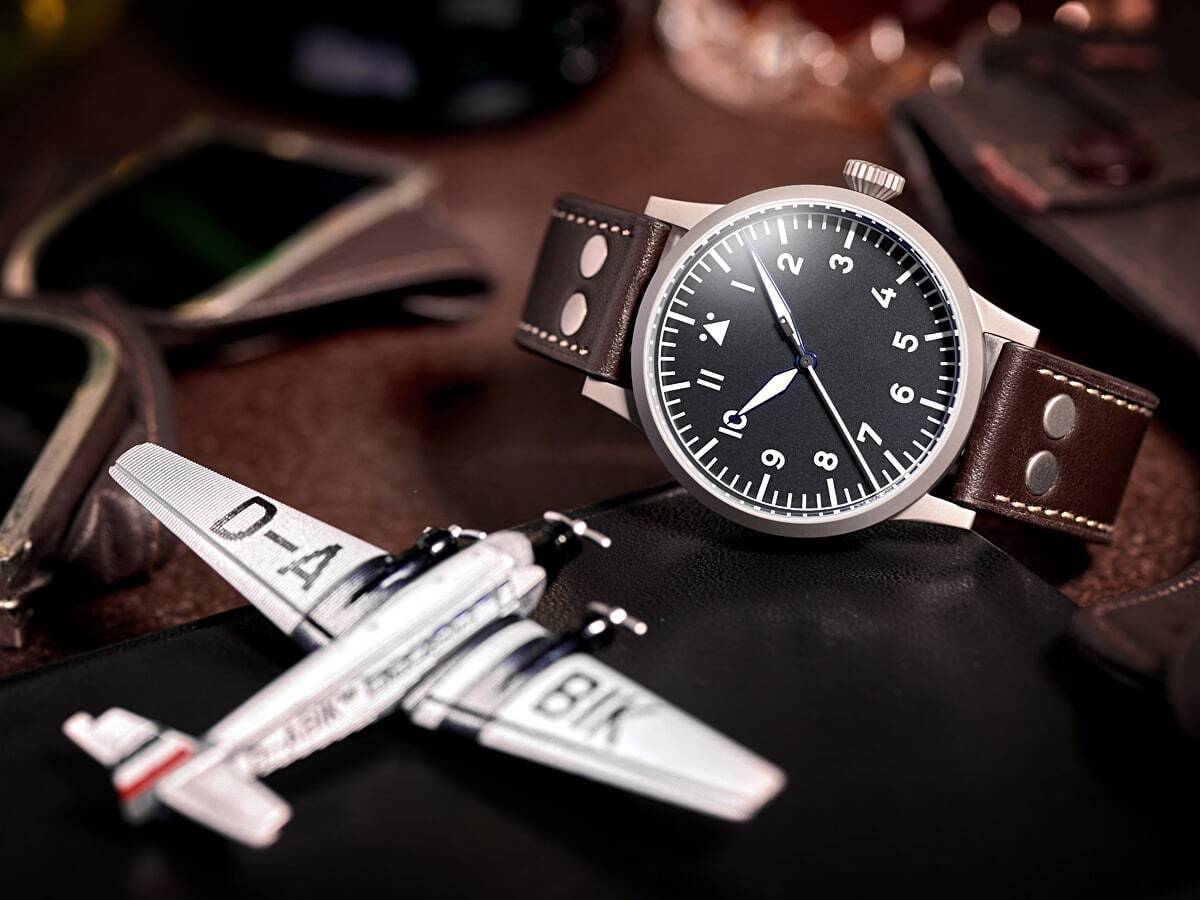
Long before pilot watches became a recognizable category in watchmaking, they were simply instruments used by people who chose to leave the ground. Early aviation demanded courage, mechanical understanding, and precise timing. Pilots relied on maps, compasses, cockpit instruments, and accurate watches to navigate distances that had never been flown before.
In that environment a watch was not an accessory. It was a tool. Every element of the pilot watch evolved from that need for clarity and reliability in the cockpit.
The Early Years of Aviation
In the early twentieth century flying was still experimental. Pilots navigated using visual landmarks and basic instruments while calculating course and speed using precise time intervals. Wristwatches quickly replaced pocket watches because they allowed pilots to check the time without taking their hands away from the controls.
Women were part of this story from the beginning. Pilots such as Amelia Earhart and Bessie Coleman demonstrated that the courage and skill required for flight had little to do with gender. Like their fellow aviators, they relied on mechanical instruments and accurate timekeeping during flight.
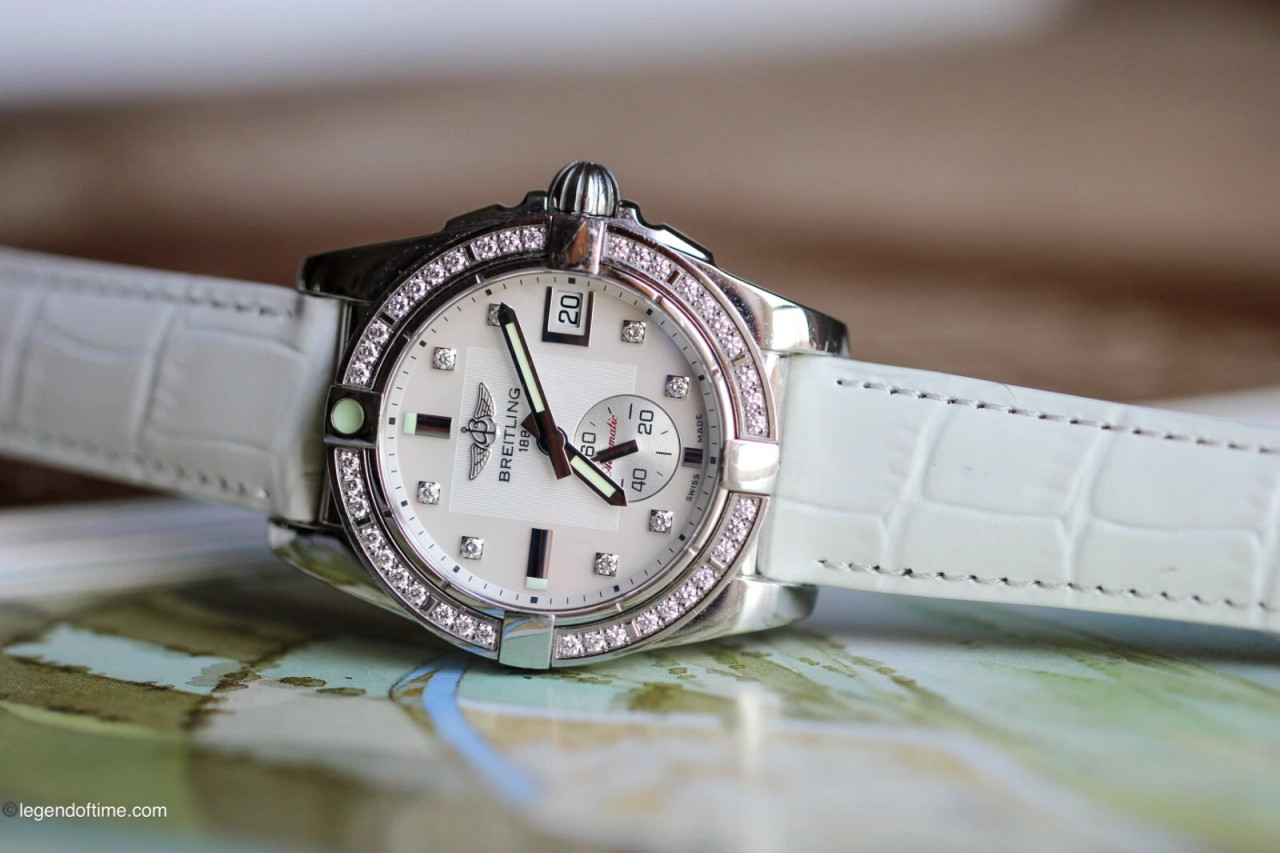
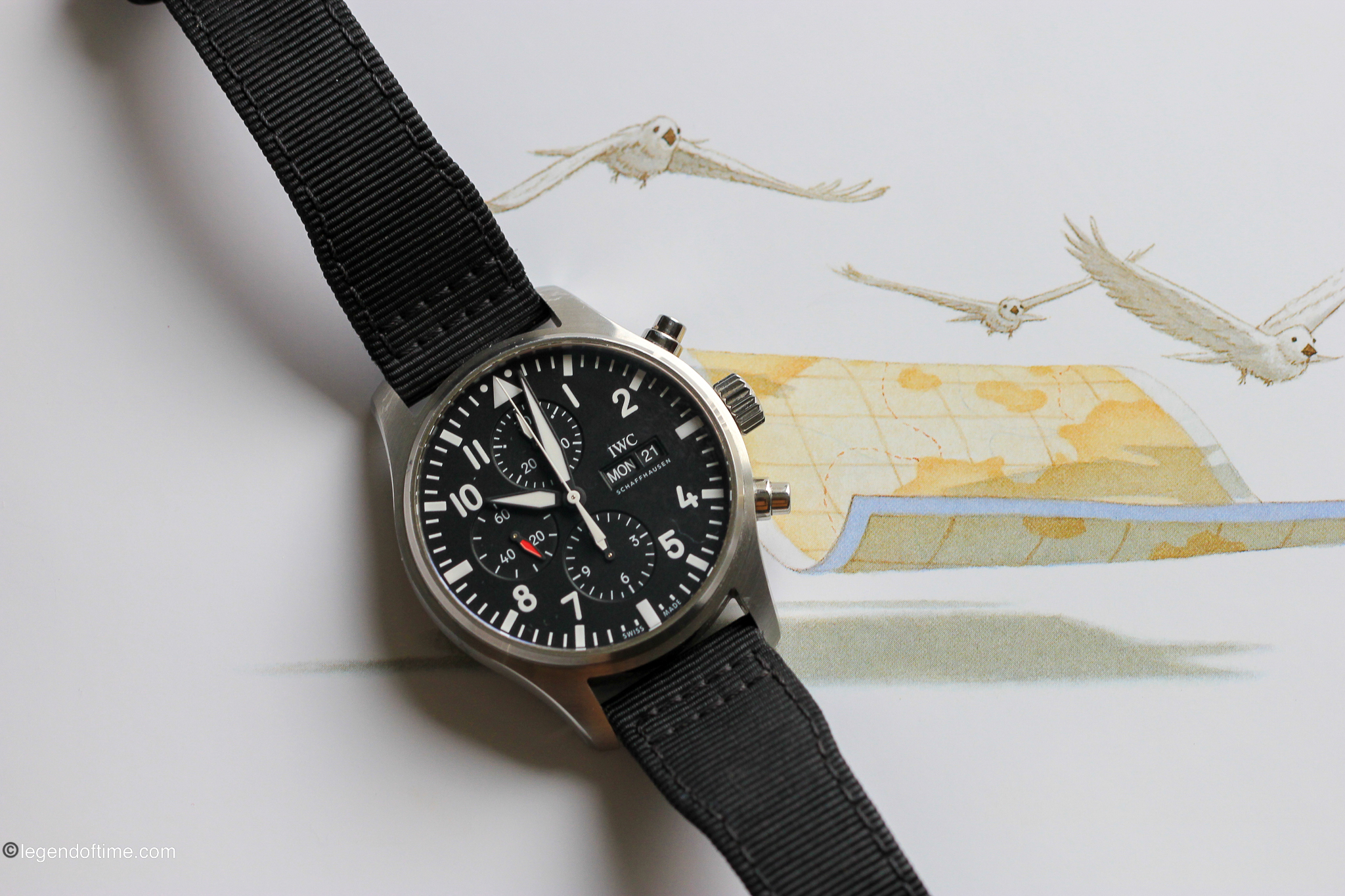
As aviation advanced through the 1930s and 1940s, specialized watches were developed to support navigation. German manufacturers including Laco became closely associated with the classic flieger dial layout, while Swiss brands such as IWC and Breitling developed aviation watches that often included chronographs and additional flight calculation tools.
Why Pilot Watches Look the Way They Do
The design of a traditional pilot watch is shaped almost entirely by function. Nearly every visual element on the dial exists because it solved a practical problem for pilots.
Legibility Above Everything
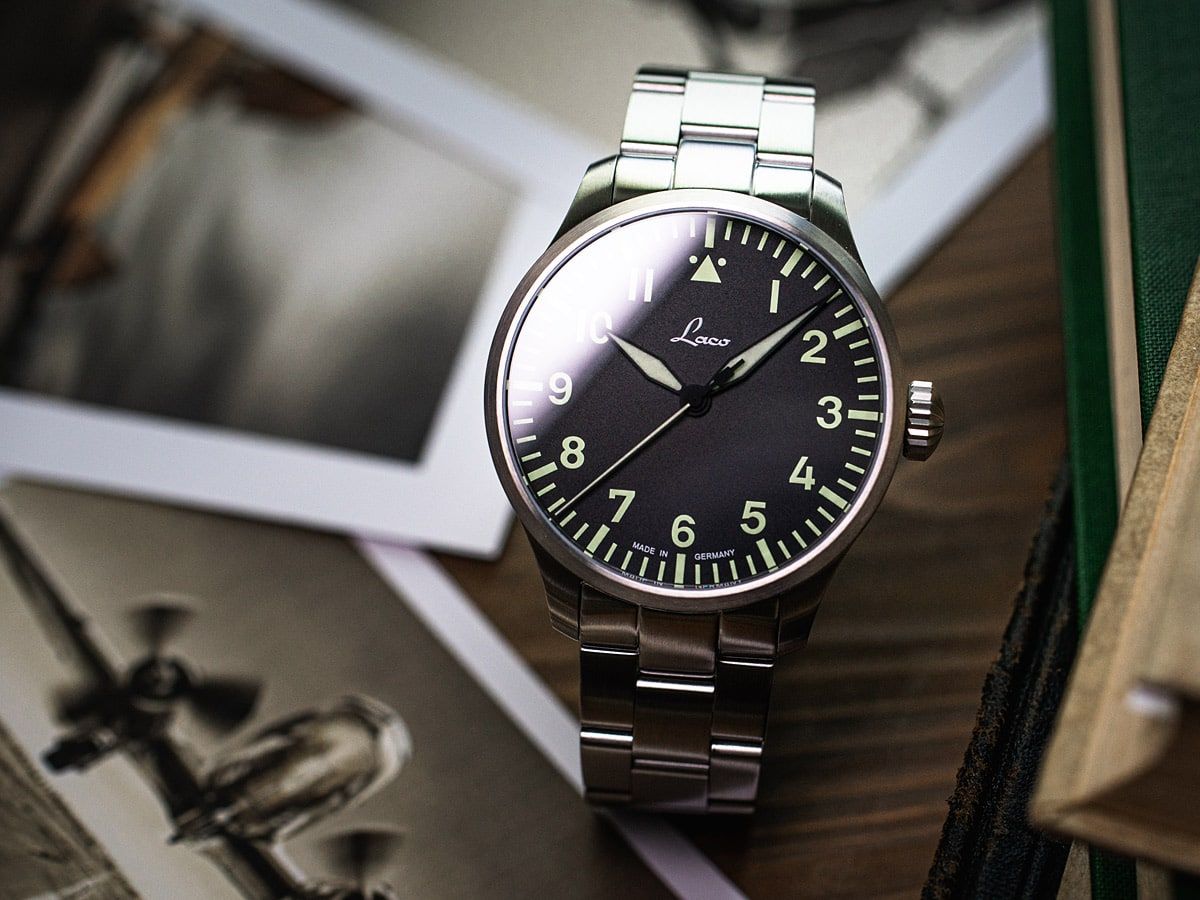
A pilot could not pause to study a dial. Large Arabic numerals, luminous hands, and strong contrast allowed the time to be read instantly. The design avoided decoration so the eye could immediately find the information it needed.
The Triangle at Twelve
One of the most recognizable elements of the pilot watch is the triangle marker at twelve o’clock. It acts as an orientation marker so the wearer can instantly recognize the top of the dial in low light.
On early navigation watches the triangle often contained more luminous material than the other markers. This ensured the top of the dial could not be mistaken, even during night flying or in poor visibility.
Large Crowns and Long Straps
Pilot watches traditionally feature oversized crowns so they can be wound or adjusted while wearing gloves. Early aircraft cockpits were extremely cold at altitude, which meant pilots often flew with heavy gloves.
Many early pilot watches also used long leather straps designed to be worn over a flight jacket sleeve. The watch functioned almost like another cockpit instrument, visible at a glance.
Two Classic Flieger Dial Layouts
Traditional German pilot watches are generally associated with two dial layouts. Both prioritize legibility during navigation.
Type A Dial
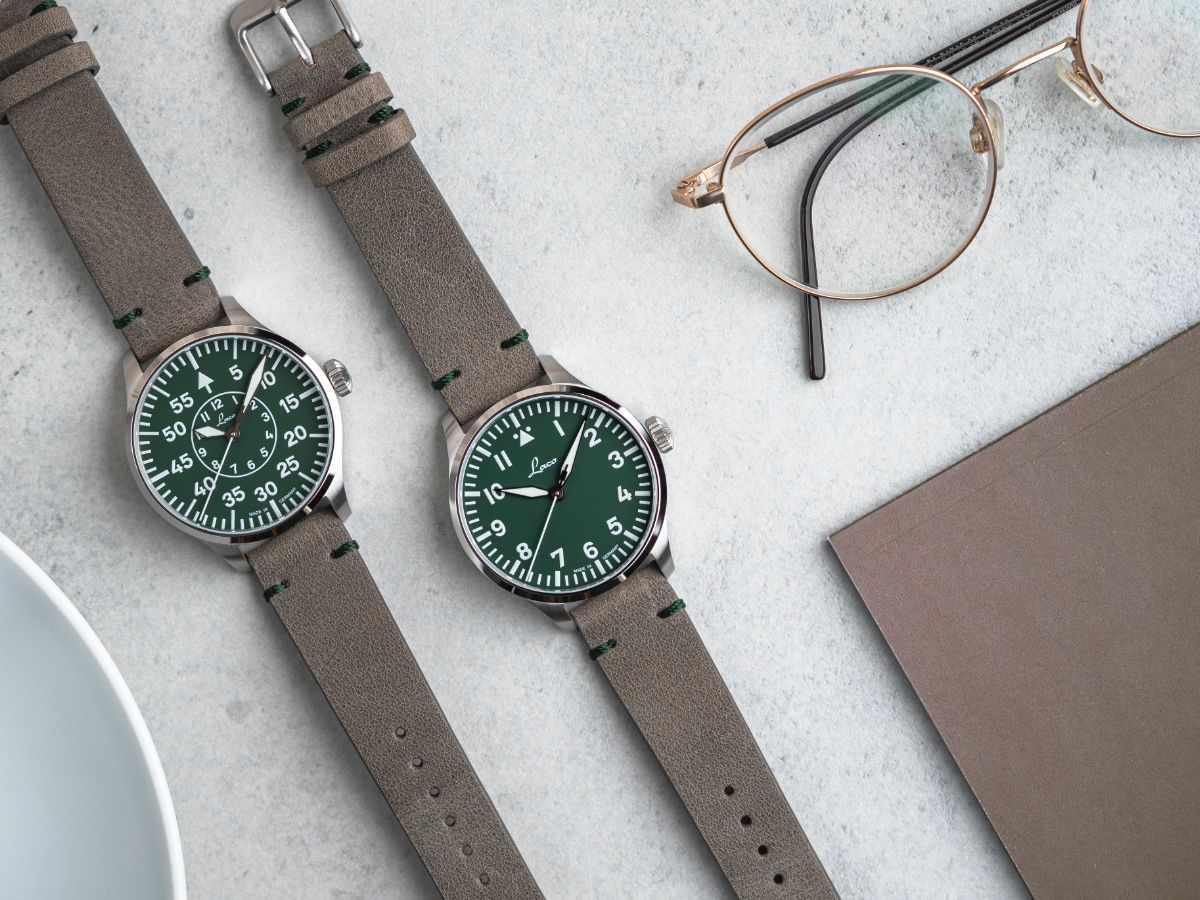
The Type A dial displays the hours one through eleven around the dial with the triangle marker at twelve. Its balanced layout and simplicity make it highly legible and visually satisfying.
Type B Dial
The Type B dial separates minutes and hours into two scales. The outer ring displays minutes while the inner circle shows the hours. This design emphasized minute tracking, which was important when calculating navigation intervals.
Different Aviation Traditions in Watchmaking
Although pilot watches share a common origin, different manufacturers approached aviation timekeeping in their own way.
German flieger watches were primarily navigation instruments. Brands such as Laco produced watches that focused almost entirely on clarity and strict dial layouts.
Swiss manufacturers developed aviation watches from a slightly different perspective. Breitling became known for chronographs used by professional pilots, while IWC refined large instrument-style pilot watches that combined aviation heritage with Swiss mechanical finishing.
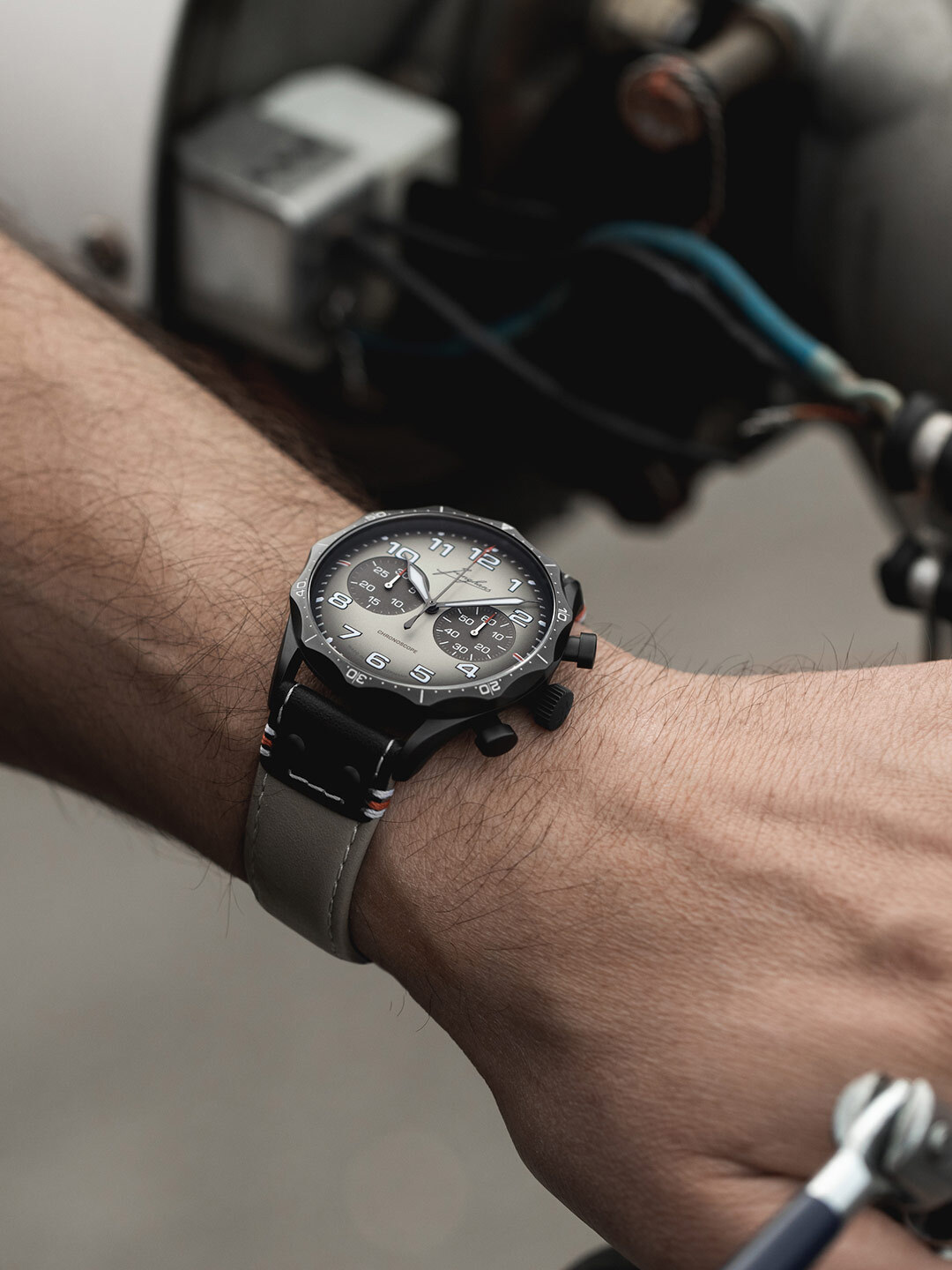
Junghans contributed to aviation timekeeping through cockpit instruments and navigation timers used in aircraft. Some Junghans pilot watches reflect this heritage through rotating bezels that allow simple tracking of elapsed flight time.
Pilot Watches Today
Modern pilot watches still carry the DNA of their aviation origins, but they are no longer restricted to strict historical designs. Today manufacturers experiment with case sizes, dial colors, materials, and modern movements while preserving the core principles of legibility and clarity.
Pilot watches are also no longer limited to professional aviators. Many people continue to learn to fly, and private aviation remains more common than many realize. For enthusiasts, wearing a pilot watch connects them to that culture of exploration and mechanical precision.
Even for those who never sit in a cockpit, a pilot watch carries a certain feeling. It is the feeling of wearing an instrument designed for people who looked at the sky and decided to go there.
Explore Pilot Watches
Discover modern interpretations of aviation watches, from classic German flieger designs to the instrument-inspired chronographs of the Junghans Meister Pilot collection.